Introduction
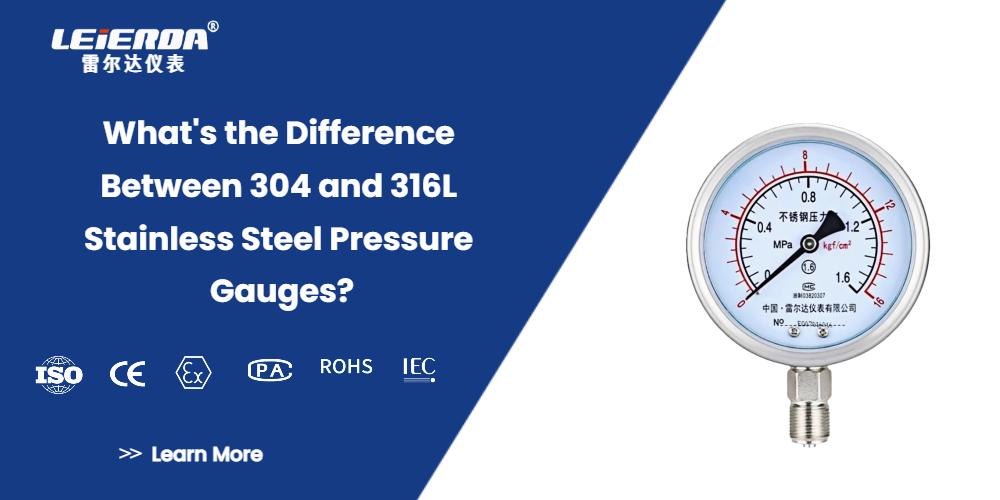
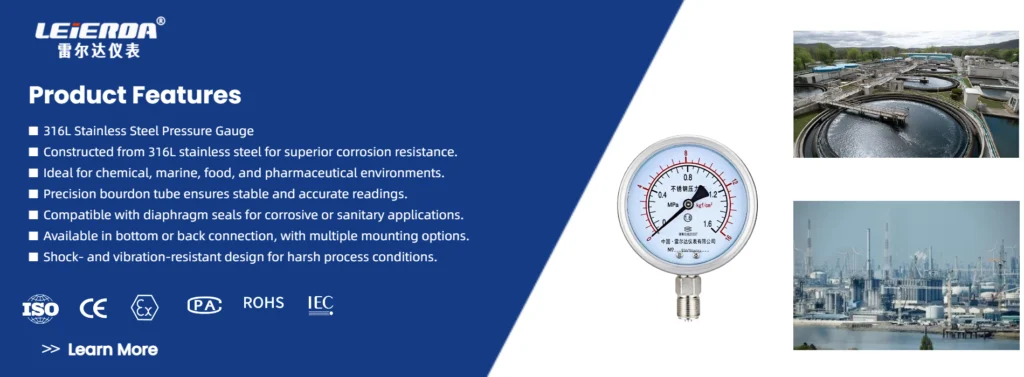
316L Stainless Steel Pressure Gauge are widely recognized for their superior corrosion resistance and durability, especially in harsh industrial environments. When selecting pressure gauges for chemical processing, food production, or marine applications, engineers often face the question: should I choose 304 or 316L stainless steel? Although both materials belong to the austenitic stainless steel family and share similar mechanical properties, their chemical composition and corrosion behavior differ significantly. This guide provides a practical, engineering-focused comparison to help you make the right material choice for your specific process conditions.
Material Composition and Corrosion Resistance
The most defining difference between 304 and 316L stainless steel lies in the addition of molybdenum (Mo) in 316L, typically around 2–3%. This minor alloying change significantly enhances resistance to chlorides, acids, and pitting. In 304, the lack of molybdenum makes it more vulnerable to corrosion, especially in saline or chemical environments.
- 304 Stainless Steel: 18% Cr, 8% Ni
- 316L Stainless Steel: 16% Cr, 10% Ni, 2% Mo, low carbon (“L”) for better weldability
From a metallurgical perspective, 316L’s Mo addition stabilizes the passive oxide layer, delaying the onset of pitting and crevice corrosion. The “L” grade’s lower carbon content (<0.03%) minimizes carbide precipitation at welds—essential when gauges are welded to fittings or diaphragms.
Real-World Performance in Corrosive Environments
In our field projects, we often see 304 pressure gauges installed on brine pipelines or evaporator units corrode within months. Pitting begins around the bezel or connection threads, leading to slow leakage and eventual signal drift. In contrast, 316L gauges maintain stable performance in the same environment for years with minimal degradation.
A common failure pattern involves chloride-induced corrosion in food, chemical, and marine applications. Even in moderate humidity with salt spray, 304 can suffer from rust stains and surface weakening. That’s why, for applications involving chemical and seawater exposure, engineers typically specify 316L as a minimum.
According to the NACE MR0175/ISO 15156 guidelines, 316L remains an accepted material for environments containing hydrogen sulfide and moderate chloride concentration, while 304 is excluded due to its lower resistance threshold.
Material Selection in Industrial Applications
| Industry / Application | Recommended Material | Typical Medium | Notes |
|---|---|---|---|
| Chemical & Petrochemical | 316L | Acids, solvents, brine | Add diaphragm seal for aggressive fluids |
| Food & Beverage | 316L | CIP agents, saline water | Choose sanitary tri-clamp connection |
| HVAC & Refrigeration | 304 | Ammonia, glycol | Cost-effective, low-corrosion medium |
| Marine & Offshore | 316L | Seawater, salt mist | Use full stainless construction, glycerin filling |
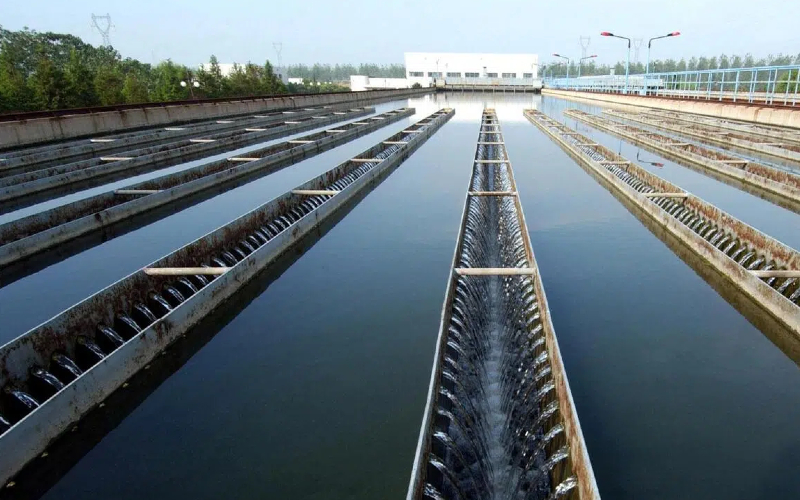
| Water Treatment | 304 or 316L | Raw water, treated water | 304 suitable for non-chlorinated systems |
That’s why 316L stainless steel pressure gauges dominate in chemical, food, and offshore sectors, while 304 remains sufficient for standard air, hydraulic, or refrigerant service. The small cost difference upfront often saves substantial maintenance effort later.
Common Selection Mistakes and Procurement Risks
One of the recurring issues in industrial procurement is mislabeling—304 gauges being sold as 316L to reduce cost. The visual appearance is nearly identical, making it difficult for non-specialists to detect.
Quick identification methods:
- Documentation check: Request material certificates (EN 10204 3.1) from the supplier.
- Magnet test: 316L is usually non-magnetic, while 304 may show slight attraction.
- Chemical spot test: Mo content in 316L gives a distinct reaction with ferric chloride.
In one of our audits, a “316L-labeled” gauge installed on a sodium hypochlorite dosing skid corroded within three months. Lab analysis later confirmed it was 304—highlighting the cost of insufficient verification.
Balancing Cost, Performance, and Over-Specification
While 316L provides superior resistance, not every application demands it. For dry air systems, nitrogen lines, or closed hydraulic circuits, 304 offers an excellent cost-performance balance. Over-specifying 316L adds unnecessary cost with no real benefit in mild environments.
The correct approach is to evaluate media composition, temperature, humidity, and exposure cycle:
- If chlorides >50 ppm → select 316L
- If media pH <4 or >9 → select 316L or add diaphragm isolation
- If exposure is intermittent and clean → 304 is sufficient
Service Life and Maintenance Implications
Choosing the right material directly influences service interval, signal stability, and safety margin. Corroded wetted parts not only distort readings but can lead to leakage or gauge rupture under overpressure. In food and pharmaceutical lines, surface corrosion can also lead to hygiene risks and contamination.
From our service records, properly selected 316L gauges typically last 2–3 times longer than 304 ones in the same chemical environment. Combined with a diaphragm seal and liquid-filled case, the lifecycle cost advantage becomes even clearer.
For critical processes, referencing ASTM A262 corrosion testing and ensuring proper passivation (ASTM A967) before installation can further extend service life.
Engineering Takeaway: Selection Logic Over Brand Preference
Pressure gauge selection should follow a structured material compatibility logic rather than brand or habit. Engineers should:
- Identify medium composition and cleaning chemicals.
- Define ambient and process temperature.
- Consider exposure frequency (continuous vs. intermittent).
- Check certification and test reports.
That’s why we usually recommend:
“If there’s any doubt about chloride presence—choose 316L.”
For non-corrosive air, water, or oil, 304 remains perfectly valid. Understanding where corrosion risk truly lies helps prevent both overdesign and underprotection.
Final Thought
Material selection isn’t just about metallurgy—it’s about reliability in real environments. A 316L stainless steel pressure gauge is not always necessary, but when corrosion risk exists, it’s the difference between predictable performance and unplanned downtime. Knowing how to balance cost, risk, and maintenance realities defines good engineering.